
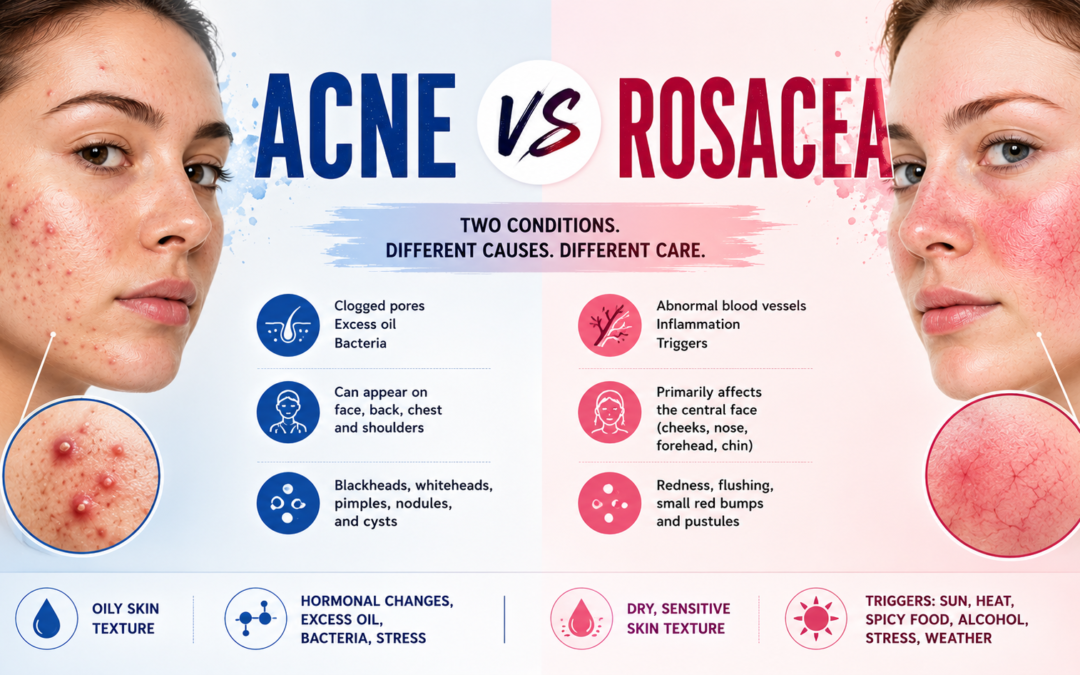
Acne and Rosacea are two very common skin conditions that often look similar because both involve redness, inflammation, and bumps on the skin. However, they are completely different conditions and require different treatment approaches. Understanding the difference between the two is important for proper skincare and effective treatment.
What is Acne?
Acne develops when hair follicles become clogged with oil, bacteria, and dead skin cells. It commonly appears as:
- Blackheads
- Whiteheads
- Pimples
- Nodules
- Cysts
Acne can affect several areas of the body, including the:
- Face
- Chest
- Back
- Shoulders
- Neck
Hormonal changes, excessive oil production, stress, and bacteria are some of the major causes of acne.
What is Rosacea?
Rosacea is a chronic inflammatory skin condition that mainly affects the central face. It is characterized by:
- Persistent redness
- Visible blood vessels
- Flushing or blushing episodes
- Small red bumps and pustules
Rosacea is more common in adults over the age of 30, especially those with fair skin. Although the exact cause of Rosacea is still unknown, factors such as genetics and abnormal blood vessel activity may contribute to it.
Common triggers include:
- Sun exposure
- Heat
- Spicy foods
- Alcohol
- Stress
- Hot or cold weather
Key Differences Between Acne and Rosacea
1. Location of the Lesions
Acne:
Usually appears on the face, chest, shoulders, and back.
Rosacea:
Primarily affects the central face, especially the cheeks, nose, forehead, and chin.
2. Nature of the Lesions
Acne:
Includes blackheads, whiteheads, pimples, cysts, and nodules.
Rosacea:
Mainly causes redness, flushing, and small red bumps. It does not produce blackheads or cysts.
3. Skin Texture
Acne:
Skin tends to be oily and rough due to excess sebum and clogged pores.
Rosacea:
Skin appears dry, sensitive, and easily irritated. Burning or stinging sensations are common.
4. Triggers
Acne Triggers:
- Hormonal changes
- Excess oil production
- Bacteria
- Stress
Rosacea Triggers:
- Sunlight
- Alcohol
- Spicy foods
- Stress
- Extreme temperatures
Why Proper Diagnosis Matters
Since Acne and Rosacea share similar symptoms, it can sometimes be difficult to distinguish between them. Treating one condition with the wrong products may worsen the skin. Proper identification helps in choosing the right skincare routine and medical treatment.
If you experience persistent redness, frequent breakouts, or skin sensitivity, consulting a dermatologist is always the best option for accurate diagnosis and treatment.
Final Thoughts
Acne and Rosacea may appear similar, but understanding their unique characteristics makes managing them much easier. While Acne is commonly linked to clogged pores and oil production, Rosacea is a chronic inflammatory condition triggered by environmental and lifestyle factors.
Early diagnosis and proper treatment can help improve skin health, reduce flare-ups, and restore confidence.