
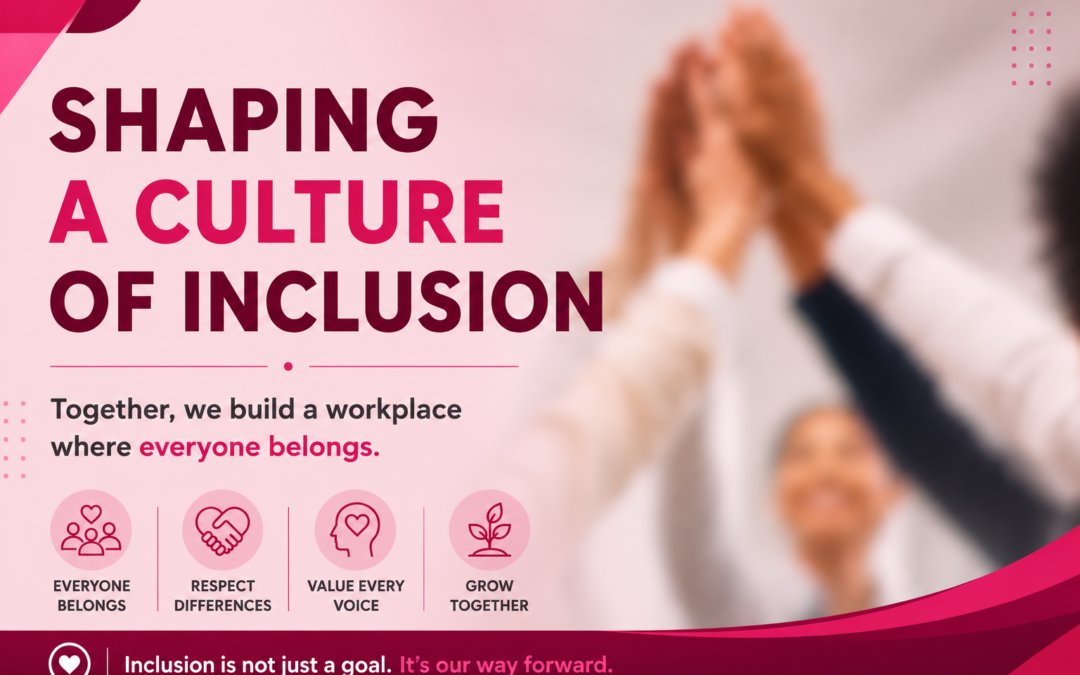
A successful workplace is built on more than performance and productivity — it thrives on connection, respect, and inclusion. Creating an inclusive culture means ensuring every employee feels welcomed, valued, and empowered to contribute confidently.
Inclusion Starts with Everyday Actions
Inclusion is not limited to company policies or annual initiatives. It is reflected in everyday interactions:
- Respecting different opinions
- Encouraging open communication
- Supporting collaboration across teams
- Recognizing individual strengths and contributions
Small actions create a stronger sense of belonging.
The Benefits of an Inclusive Workplace
Companies that prioritize inclusion often experience:
- Better teamwork and employee morale
- Increased innovation and creativity
- Stronger employee retention
- Improved communication and trust
- Higher overall workplace satisfaction
When employees feel included, they are more engaged and motivated to perform at their best.
How Leaders Can Encourage Inclusion
Leadership plays a key role in shaping workplace culture. Inclusive leaders:
- Listen actively
- Encourage diverse perspectives
- Create equal growth opportunities
- Foster transparency and fairness
- Build safe spaces for communication
Strong leadership helps employees feel respected and supported.
Inclusion Drives Long-Term Success
An inclusive culture strengthens both people and business performance. It builds stronger teams, improves collaboration, and creates a positive environment where individuals can grow together.
Inclusion is not just about being present — it is about making everyone feel they truly belong.